

🇲🇽 Mexico's return another step in Spiegel's plan to put Queretaro on the soccer map
El Tri's visit Wednesday helps show "this city and this state can support a big club," the owner tells Getting CONCACAFed.

The Mexico national team does not come to Querétaro often. When it does, it’s a big deal. After all, Querétaro has not been relevant in Mexican soccer for some time.
The last time the Gallos Blancos were in the Liguilla, the final eight of Mexican soccer, was in 2019. Their last series win came back in the 2015 Clausura. Even that ended in heartbreak, when Gallos lost the first leg of the final 5-0 to Santos Laguna and fell 5-3 on aggregate.
But it’s a new era in Querétaro. At least, that’s the idea.
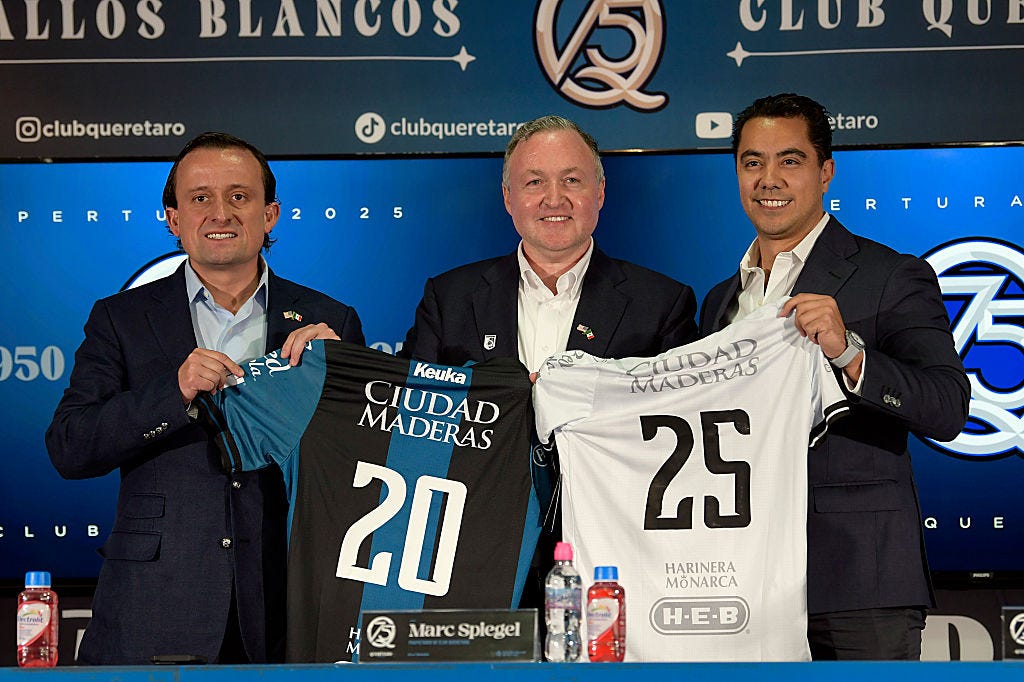
The national team is in town tonight where a sold-out crowd is expected to see El Tri take on Iceland. And while results haven’t been instant, a new ownership group led by American investor Marc Spiegel has provided something missing for years in Querétaro: Hope that their team can get better.
“This city and this state can support a big club. Our job is to certainly put the right infrastructure and strategy in place,” Spiegel said in a phone interview Sunday. “It’s not something that happens overnight. We know it’s a long-term process.
“We’ve been very vocal about opening our arms to the city, to the fans, to the young folks, and people even outside of our market that want to be part of what we hope to be: A brand that is very exciting, it’s fresh, it’s modern, it’s hip. We’ve had overwhelming positive energy from the locals.”
🇺🇸🇲🇽 Queretaro's sale shows the American ownership wave is coming to Latin America

The first words were simple.
Bringing the national team back to town is part of that strategy. Key leaders in the Querétaro structure like CFO Mariana Acosta and CBO Pepe Escamilla suggested pushing to host one of El Tri’s matches in the lead-up to the 2026 World Cup.
While renovations to the Estadio Azteca ahead of that tournament have made it more common, it’s not always easy to secure a Mexico match. The men’s team typically plays five friendlies in the United States, limiting the available inventory of games.
There also must be buy-in from local government - in Querétaro’s case the state owns the stadium. There even are sponsorship concerns, as some of the federation’s most powerful supporters bristle if a game is played at a stadium whose naming rights or concessions offerings are controlled by a rival.
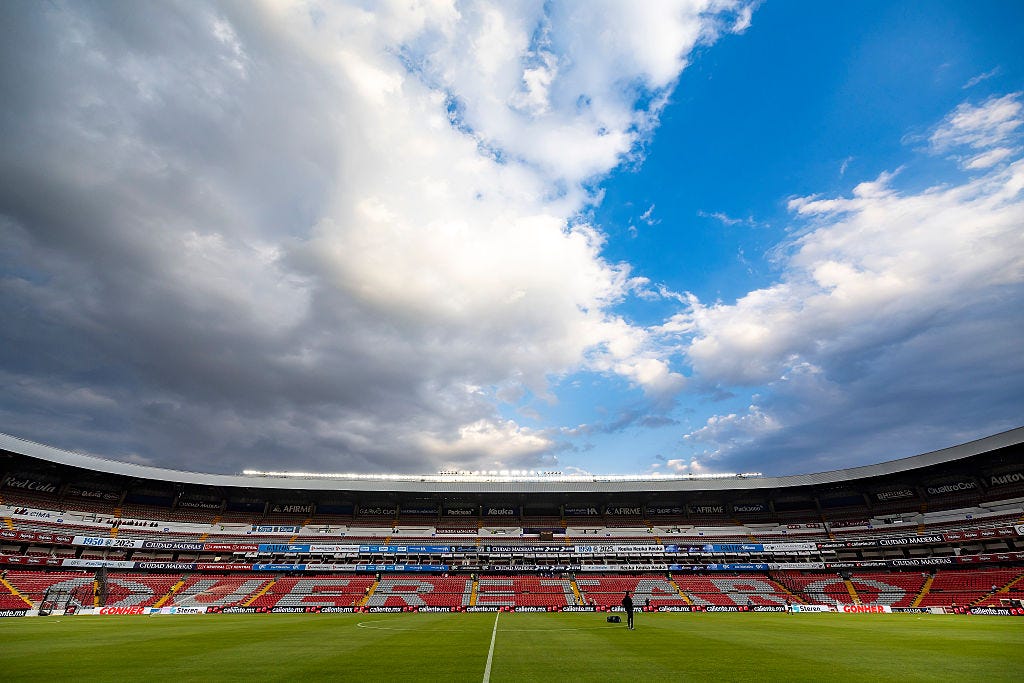
Those hurdles were overcome, and tonight El Tri returns to La Corregidora for the first time since a 2018 friendly against Chile.
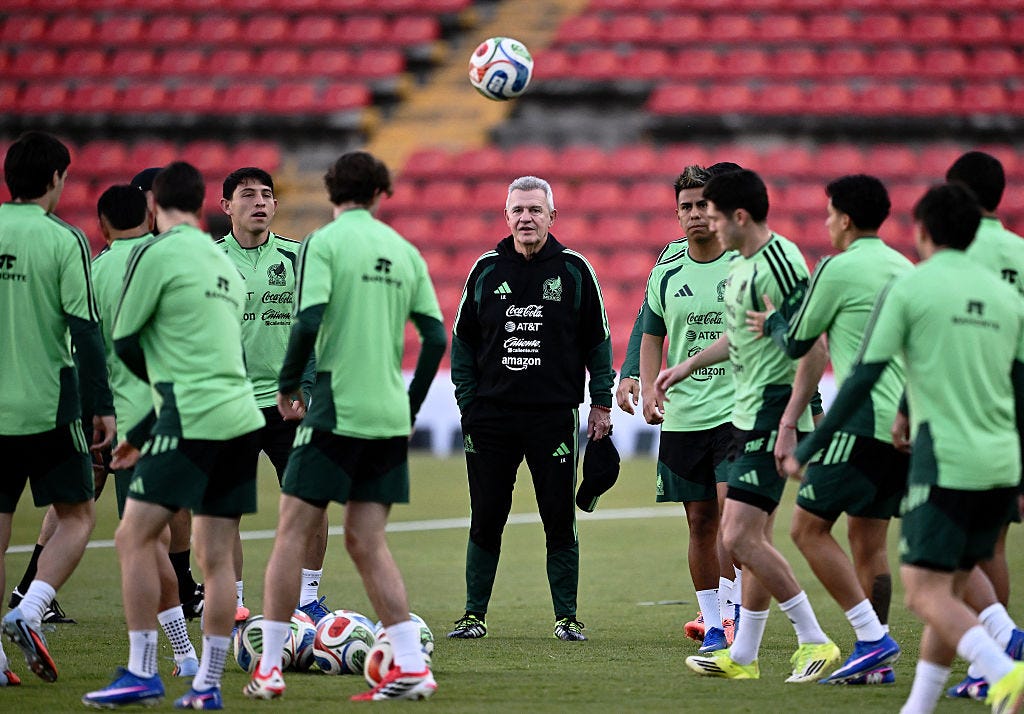
“There was plenty of coordination with (local government officials), and they were certainly extremely supportive,” Spiegel said. “We’re excited. A lot of work has been done in a short time period, but certainly happy to be part of this run up to World Cup 26.”
Even more work ended up being required than Spiegel expected. The Mexican government’s capture and killing of Cartel Jalisco Nueva Generación leader Nemesio “El Mencho” Oseguera Cervantes sparked a show of force from the cartel that created chaos throughout central Mexico. With uncertainty, and a few instances of the type of arson that paralyzed Jalisco, Gallos’ match against Juarez scheduled for Sunday night was postponed.

That raised questions about whether or not Wednesday’s match would even go ahead, but the national team carried out the camp it had planned and is set to play the match.
Authorities have a reinforced security plan for the match, encouraging fans to arrive early to the sold-out stadium and noting there may be unexpected road closures and inspection points in the area.
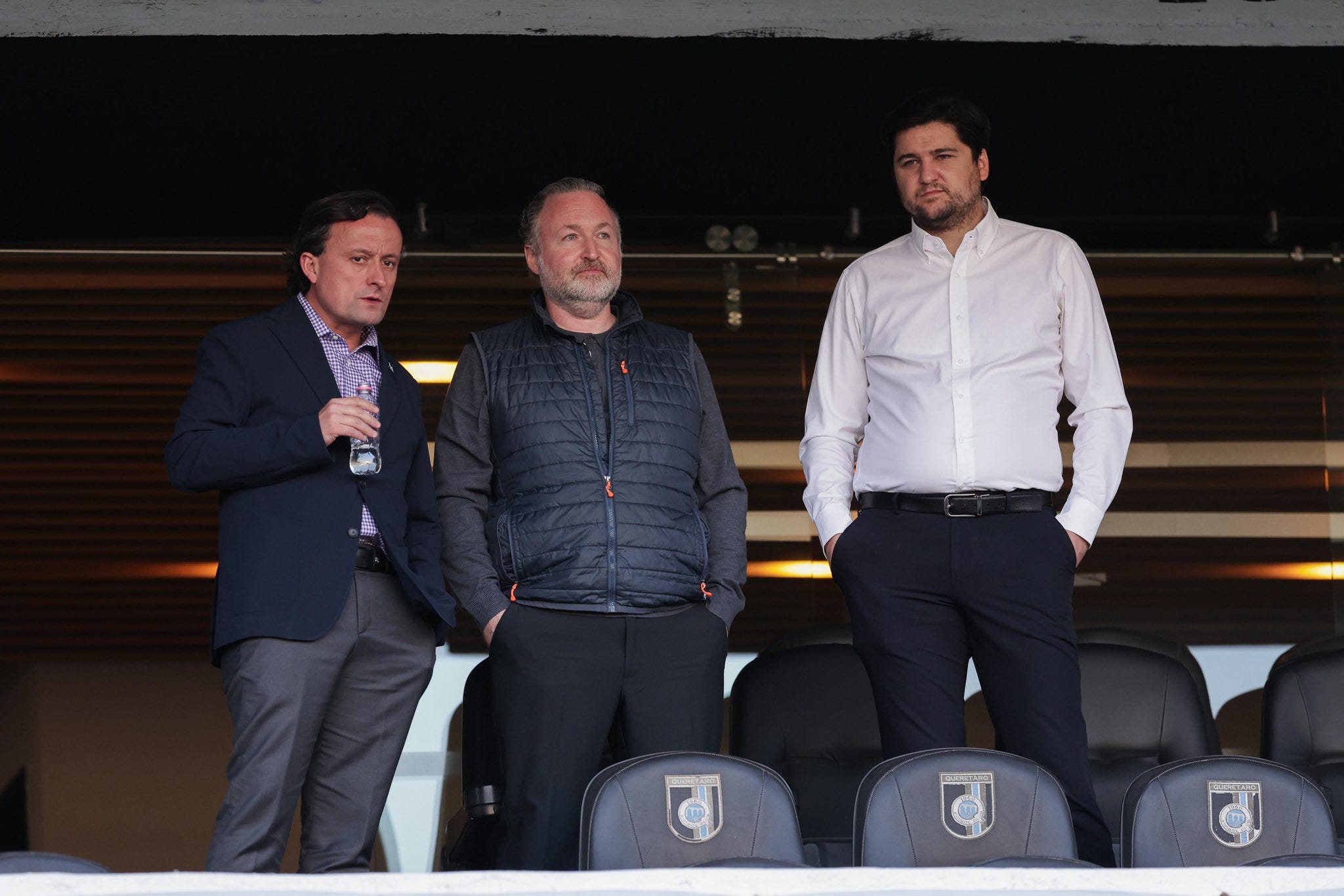
Spiegel knew security would be a topic when he took over Querétaro in July 2025. The team was on the market in part because of one of the darkest days in Liga MX history, the riot in March 2022. The scenes of Querétaro and Atlas fans brawling at the Corregidora made international news and shocked even those familiar with violence around soccer and in Mexico for the nature of their brutality. As families ran onto the field to find safety, victims were stripped of their clothes, whipped with belts and left fighting for their lives on the floor of the stadium.
Inaccurate reports of deaths circulated in the aftermath. While the official tally was 26 injured parties who required medical treatment, and all survived, it was a moment that forced Mexican soccer leaders to make serious changes.

Just this month, a production company announced it is working on a documentary about the incident, meaning reminders of the fighting will be back on screens across the Americas.
Spiegel knows that the name of the club and the city may remind casual fans of those scenes, but he’s confident that the organization can continue showing that the incident was not representative of Querétaro.
“We have to own that. It happened,” he said. “You either learn from it and get better or let it sink you. When we did a lot of research about the club and really dug into that, that was one of the first places we started with, understanding why it happened. It was a confluence of a lot of different things that we felt like were not going to be a scarlet letter on the club forever.
“We’ve said many times that this is for entertainment. We want to be very family friendly, and certainly we know the league is going down that path as well. There’s evolution. Your history is your history. You can’t change that, but you make a choice every day: Do you let it linger or do you get better? We choose to improve every day.”
The next step in Querétaro’s evolution, Spiegel says, is getting better results on the field. While there have been a few green shoots, Gallos’ men’s team sits outside the playoff places with five points from six matches. The women’s team has played 10 matches and is yet to enjoy a victory.
Spiegel hopes fans will be somewhat patient as the team looks to rebuild the first-team, strengthen the academy and find young players with a data-driven approach. But he also doesn’t want to put a product on the field that isn’t able to provide something to celebrate.
“I’d be lying if I said we were happy with where we are,” he said. “We need to be better, and we’re competitive people. But we certainly know that you can’t flip an entire roster in one or two windows.”
Off the field, Spiegel said he’s hoping to push for change in Mexican soccer but pushed back when asked if he wanted to take on the role of a “disruptor”. “Certainly not disrupt at all,” he said, expressing confidence in the “good people, smart people” present at Liga MX owners meetings and working in the league.
Even so, he expressed support for an idea that would be one of the biggest changes to Mexican soccer business in some time. With clubs owned by Mexico’s TV giants, teams still find individual media rights deals, signing directly with broadcasters in Mexico and the U.S. rather than the league offering its inventory to one or two broadcasters as part of an exclusive package.
As one of the few leagues in the world almost as popular in a different country (specifically the U.S.) as it is in the country in which it operates, Spiegel said the potential is enormous if Liga MX were able to bundle its TV rights together.
“If we do our job and do the right thing, this should be one of the five biggest leagues in the world. The demographics truly support that,” he said. “In terms of centralizing the media, I think it makes a lot of sense. You look at leagues, whether big leagues in the United States, the biggest leagues around the world in global football, they all have centralized media rights.
“Certainly it’s a monetary thing, but I think also in bringing a platform to the fans to allow them to really enjoy the game, enjoy their teams’ matches without having to figure out what channel they’re on and having it be a hodgepodge. I think it’s just, in a digital age, I think centralizing makes a lot of sense.”
As Necaxa’s U.S.-based ownership group and other globally minded club owners discovered, it won’t happen simply. Putting media rights together was one of a number of changes Juan Carlos Rodriguez hoped would be pushed through in a December 2024 owners meeting that would’ve paved the way for a $1.25 billion investment from Apollo Global Management. He became so frustrated by the impasse that he resigned, his position currently filled by Mikel Arriola - who also is still carrying out the duties from his previous position as Liga MX commissioner.
Spiegel says he’s not daunted by the challenge, finding the joy in doing the things that must be done for the club to continue growing and to spur the league into making changes that would help it grow internationally.
“I enjoy working. This is not my first rodeo. We know it’s difficult, but you either lean in and embrace it or let it paralyze you,” he said. “We surrounded ourselves with some really good people. We know what this thing can be, and we’re not going to rest until we either achieve it or surpass it.
“That’s not just Club Querétaro, it’s the league, it’s football in Mexico. There are some really good people who want this thing to be what it can be, and we’re going to work our tails off every day for that.”
Today, that means ensuring the fans filling the stadium in Querétaro are able to safely enjoy the return of the national team. Tomorrow, it means pushing Gallos back to the postseason and earning that first series win. In five years? Spiegel hopes it means Querétaro is relevant in Mexican soccer.